Hipster Fresh
A service prototype focusing on helping family businesses expand and promoting local healthy food.

Objective
A collaboration with Deloitte Digital to help Hipster Fresh, a family-run café, explore how they could expand their business and strengthen community engagement.
My Role
UX Research
UX Design
Project Management
Tools
Miro
Figma
Canva
Duration
Research - 4 weeks
Prototyping - 2 weeks
The Challenge
Scaling without losing identity
Hipster Fresh, a family-run local café in Hackney Wick, is loved for its community spirit, quality produce, and personal service.
As demand grows, the business faces the challenge of expanding its reach while staying true to its local brand identity.
💛 Brand Authenticity
Scaling risks diluting the community-driven, personal experience that defines Hipster Fresh.
🌍 Expansion Pressure
Plans to move into new cities raise questions about scalability and logistics.
🛒 Demand for Subscriptions
Hipster Fresh wants flexible, consistent access to produce, but no system exists yet.
📦 Operational Strain
A small team struggles to meet growing on-demand orders.


How can we design a subscription service that maintains the unique, community-driven identity of the Hipster Fresh experience?
The Solution
A membership-based service that integrates food, culture, and community.
By engaging customers through exclusive content and community activities, we aim to attract and retain a loyal user base. This model not only drives repeat business but also provides valuable customer data that can be used to eventually launch a sustainable and profitable food subscription service.

Key Features
Membership Program
Discounts and points for frequent visits.
Guests can browse local businesses and events, while members gain access to exclusive content, discounts, and priority registration for unique workshops and experiences.


Local Events & Workshops
Interactive experiences with local produce.
Events are designed to drive foot traffic to local businesses, allowing customers to engage with the brand in person and build a stronger connection to the community.
Personalized Recommendations & Discovery
Helps users easily discover new local food businesses and products.
By collecting customer data, Hipster Fresh can provide personalized recommendations that expose users to hidden gems in their neighborhood and encourage them to try new foods, all while supporting the local economy.

Storyboard
Storyboarding the Local Resident's Journey with Hipster Fresh
The storyboard helped us to visualize how the Hipster Fresh would be used by the local artists at various points in their journey.


Our Process

Research
Our Approach
We took a mixed-methods approach to our research, ensuring our solution was grounded in a deep understanding of our users and the business.




Secondary & Observational Research
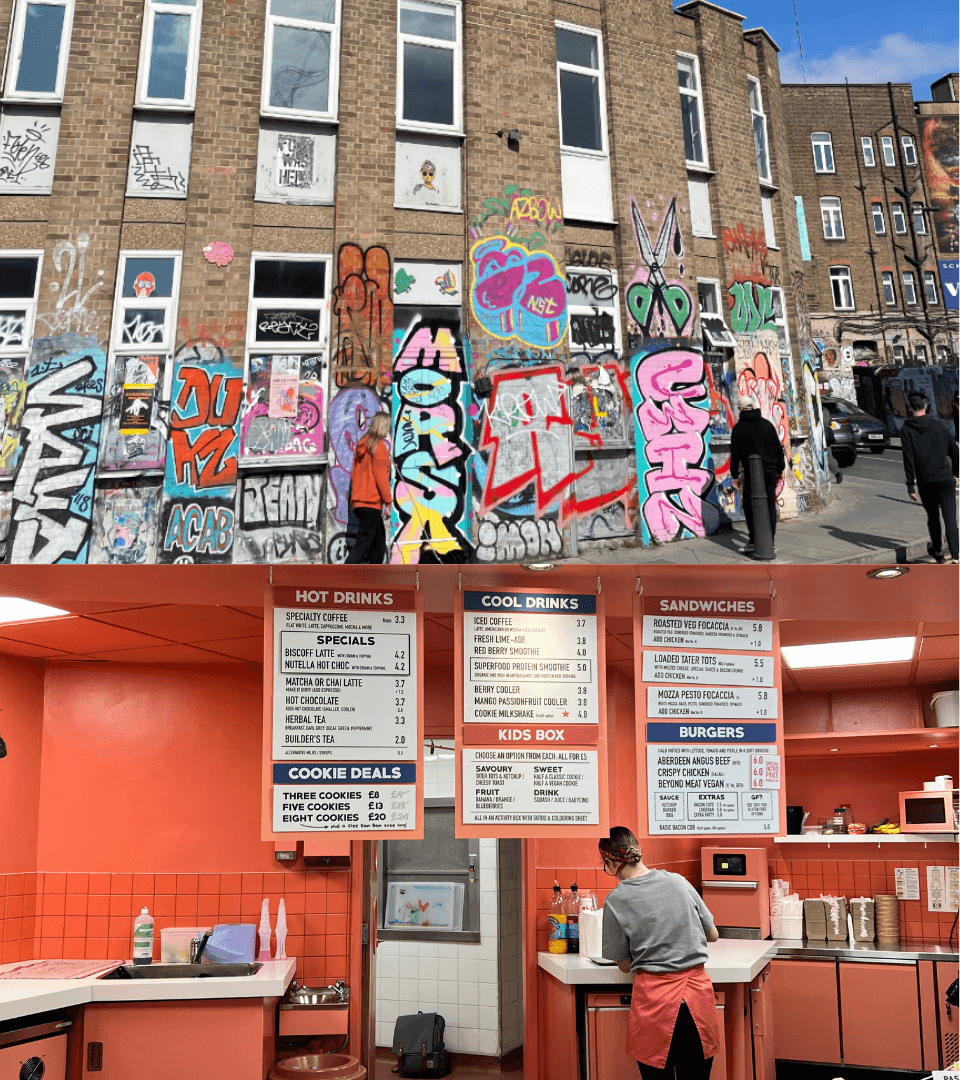
Hackney Wick is a
Young & Creative Hub
The area has a high proportion of young residents, with a 55% of people 35 and below.
Hackney Wick is a vibrant, artistic, and culturally mixed hub. It has the 6th highest LGBTQ+ population in the UK.
In Hackney Wick, we observed an "artistic atmosphere" with a unique blend of industrial buildings and striking graffiti.
Opportunity for a Unique Service
Our research on "other similar businesses" and "existing Cafe Shops" showed that competitors often focus on simple food and drink offerings.
We found that one local cafe in Loughborough, hosts events with local artists, which highlights how community-focused events can be a key differentiator.
Observations highlighted the importance of a cafe's ability to foster a sense of community is key to customer loyalty and repeat visit.
Sense of Place is the Key
to Customer Loyalty
Discovered that cafes in the area that are highly reviewed are often praised for creating a "memorable experience."
We experienced the "warm and welcoming" environment of a family-run cafe in Loughborough.
Many Want to Purchase Local Food,
but Prioritize Convenience
The vast majority of British consumers say they want to buy more local produce, but their grocery choices are ultimately driven by convenience and cost.
Consumers want more range/availability of locally sourced food.
Qualitative Interviews
To better understand customer and business perspectives, we conducted semi-structured interviews. These conversations gave us valuable insights into café culture, attitudes toward local food, and the role of cafés as social and creative hubs.
🎓 2 University Students
Both are frequent cafe-goers.
One student living in Hackney Wick who is active in the local creative community.
☕️ 1 Family-Run Local Cafe Owner
Running a community-driven business

“The programme doesn’t give me a report of repeated customers…we don’t have that data…We haven’t got the data to see if people would come every day or not.”
"Our cafe is a place where everyone is welcome…a community hub where they can feel at ease.”
“We’ve seen the demand for a community area for people.”
— Local Family-Run Cafe Owner

“Encourage me to go more often because like for [cafe name], just like you just need six stamps to redeem one more drink.”
“The atmosphere and the environment is really nice…high ceiling, sunlight, lots of plants.”
”I think local food is good, but it’s usually more expensive, so I don’t buy it that often."
“I think that one is more like locally owned, like it’s more interaction.”
— University Student A

"I love trying new places, but London is so expensive."
“Local food is nice, but I think it’s pricey… and I'm not sure if it’s worth trying cuz I don’t know where it comes from.”
“When you’re in school, you mostly just see the same students. In London I feel that it's really hard to make connections, and it can feel a bit lonely.”
"I went to a clay workshop… it was cheap, and people were just sharing their stories. It made me feel connected…"
— University Student B
Insights

Customers want to connect with like-minded people, not just buy coffee.
Many visitors see cafés as social hubs and look for opportunities to meet new people who share their interests, especially in creative communities.

Healthy, locally sourced food is valued, but high costs create hesitation.
Students and young professionals appreciate organic and fresh food but are cautious about spending due to London’s high living expenses.

Café visits are about inspiration and community as much as convenience.
Art students in particular view cafés as spaces to spark creativity, find inspiration, and build a sense of belonging.

Local businesses want to launch subscriptions but lack customer data to do so effectively.
Local cafe owners recognize the potential of subscription models but struggle to collect and use customer data effectively.
Product Discovery
Persona Development
To make our research insights actionable, we created a persona that embodied our target users' needs and challenges.

Ideation
We framed our research insights into “How Might We” questions and mapped them against user and business goals.
Using a priority matrix and group brainstorming, we generated and clustered ideas before selecting the most impactful ones. This process guided us toward features that balanced customer needs with Hipster Fresh’s growth.


We see an opportunity to design a service for art enthusiasts in Hackney Wick that encourages them to visit Hipster Fresh more often.
By offering affordable experiences, building community connections, and reassuring customers about food quality, Hipster Fresh can strengthen loyalty and pave the way toward a sustainable subscription model.

Connecting Needs with Features
Based on our research data and concept statement, we developed three core features designed to achieve both user and business goals simultaneously. These features serve as the foundation of the Hipster Fresh service.
Features
User Needs
Business Goals
Point-Based Membership Program
"As a frequent cafe customer who lives in a high-cost neighborhood, I want to be more cost-efficient to manage my finances better."
The membership program directly addresses this need by offering discounts and rewards.
The business wants to evolve into a sustainable subscription model and expand its customer base.
This feature helps to retain customers and collect customer data, which is essential for future growth and investment.
Scheduled Events
(e.g., Art Events/Tasting Events)
"As an introverted art enthusiast, I wanted to engage in conversations with fellow art enthusiasts and meet new people to get more art inspiration. I also wanted to feel reassured about the quality of locally produced food before committing to a purchase."
These events allow customers to interact, share common interests, and confidently try new products.
The business wants to create a consistent demand, build a unique brand identity, and understand customer preferences.
These events offer a more personalized experience that foster a sense of community, attract new customers, and provide a direct way to collect feedback on what customers like, helping to inform future menu and product decisions.
Service Blueprint
To validate our service, we created a blueprint that maps the customer journey, including supporting touchpoints and operations. This highlighted how membership sign-up, food tastings, and community events connect across both user-facing and back-end processes, ensuring a scalable and seamless experience.

Prototyping
Paper Prototypes
Before committing to a final visual direction, we began with paper prototypes and low-fidelity wireframes.
This stage enabled us to explore different layouts rapidly and user flows, and quickly test core concepts without the time-consuming process of digital design.

Testing the Prototype
We conducted user testing with 9 university students to validate our designs and uncover potential usability issues.
We observed how participants navigated through the screen and gathered their feedback to inform our design decisions.


Design Iterations

Clearer Event Poster
Redesigned posters with a stronger information hierarchy so users could instantly see what, when, and how much.

Improving the Signup Page
Simplified forms and explained data collection, making users feel safer and more comfortable sharing information.
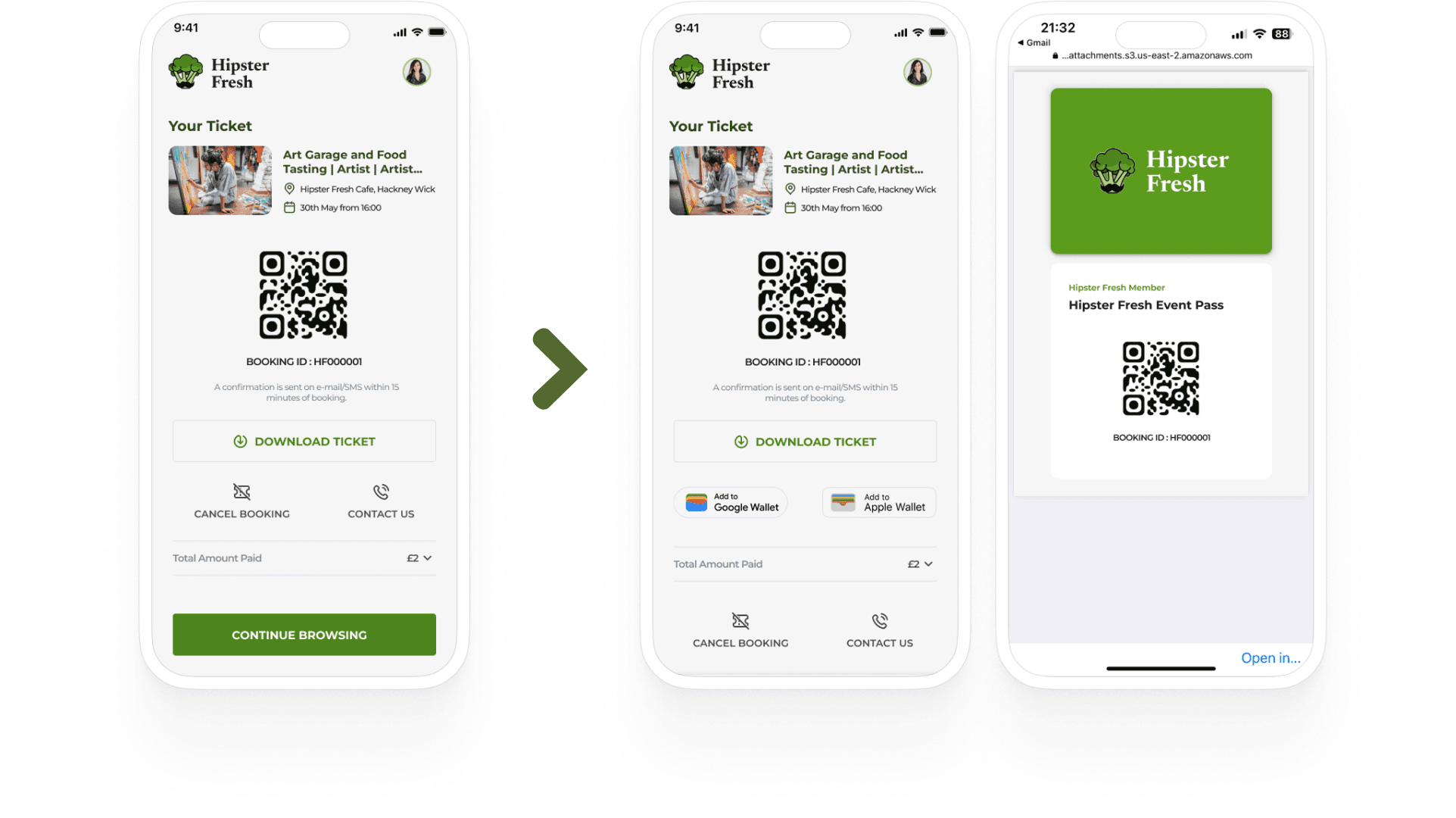
Mobile-First Flow
Streamlined the booking journey, added wallet integration, and ensured accessibility for a smoother user experience.

Reflection
This project provided a deeply personal journey of professional and personal growth. Stepping into an unexpected leadership role allowed me to reflect on my approach to teamwork, collaboration, and my own professional identity.
Adaptability is Key
I learned to adjust quickly to shifting project needs. By refining our abstract timeline into specific tasks, I improved accountability and ensured the team kept pace with project demands.
Balancing Empathy with Directness
Leading a diverse team taught me the importance of open communication. While empathy maintained harmony, I also learned that direct conversations can resolve conflicts more effectively.
The Power of Structured Communication
Introducing agendas and templates transformed our meetings from unfocused to productive. Clearer structures kept the team aligned and boosted overall efficiency.
Fostering Inclusive Environment
With members from four countries, I actively encouraged participation, asked open-ended questions, and created a safe space for sharing. This helped overcome language barriers and built team cohesion.
Discovering a Professional Identity
I realized my strengths as a facilitator—bridging user needs with business goals—while confirming my passion for UX research and design. I thrive as a supportive leader who can step up when needed.
Next Steps
Looking ahead, here's how we would evolve Hipster Fresh to address these points and build a more robust, market-ready product.
Refining the Business Model
Conduct deeper research into customer price sensitivity and explore additional revenue streams through local partnerships.
Developing a Content Strategy
Build a content calendar for events and promotions, while enabling businesses to easily submit curated content.
Exploring Further Monetization
Expand beyond memberships by testing event commissions and premium promotion options for businesses.
Building a Scalable Service
Design a scalable backend system and adaptable framework to expand Hipster Fresh into new neighborhoods and cities.
